Author: Eric Freeman

  • From the Ashes of 2008 to a New Reckoning: The Collapse of Market Financial Solutions

    From the Ashes of 2008 to a New Reckoning: The Collapse of Market Financial Solutions

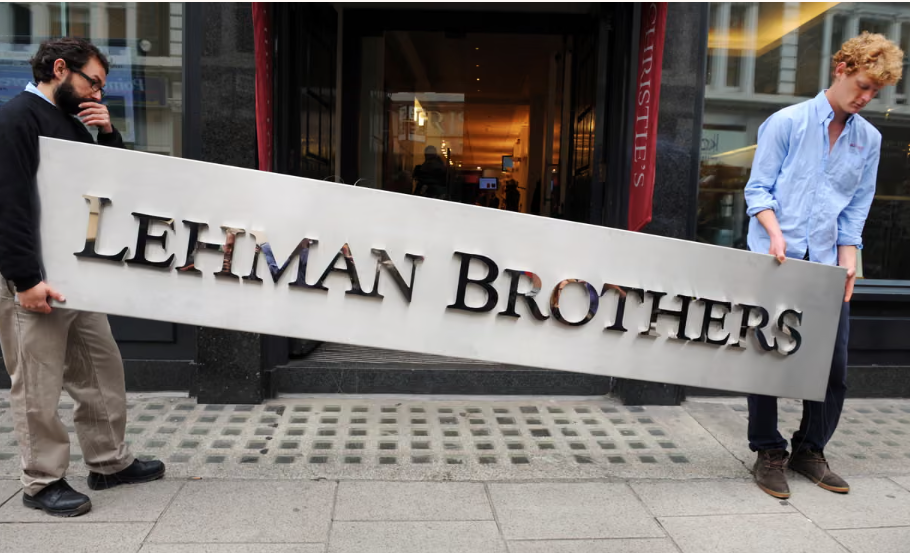
    When the global housing market imploded in 2008, glass towers in London’s financial district suddenly looked far less permanent. Banks retreated, credit evaporated, and regulators promised a safer system. Out of that wreckage emerged a new class of lenders—nimbler, less constrained, and eager to fill the void left by traditional finance. Among them was Market Financial Solutions Ltd., founded in 2006 but propelled into prominence by the post-crisis demand for fast, property-backed credit.

    Nearly two decades later, that post-2008 experiment has met a dramatic test.

    On February 25, 2026, Britain’s High Court approved the firm’s entry into administration, a form of insolvency protection, after what began as a routine request to address an “unexpected banking-related issue” spiraled into allegations of fraud, mismanagement, and missing collateral. The decision, overseen by the Chief Insolvency and Companies Court, has sent shockwaves through the City of London and across global credit markets.

    A Post-Crisis Success Story—Until It Wasn’t

    In the years after 2008, as major banks tightened lending standards, MFS thrived by offering short-term bridging loans to property developers and investors. It positioned itself as a reliable intermediary—quick, asset-backed, and profitable. Its loan book swelled into the billions, and recent years delivered record earnings.

    Behind those headline numbers sat more than £2 billion in institutional funding, sourced from some of the world’s largest financial players. That structure, once seen as validation of MFS’s credibility, is now at the center of the fallout.
    Allegations That Shook the Court

    The crisis intensified when affiliated lenders Zircon Bridging Ltd. and Amber Bridging Ltd.—already in administration—submitted court filings alleging serious irregularities. They claimed loan repayments failed to reach designated accounts and that collateral securing major funding lines appeared insufficient.

    Presiding over the emergency hearing, Judge Briggs described the accusations as “very serious.” The court highlighted evidence pointing to potential fraud and “double-pledging,” a practice in which the same assets are used as security for multiple loans without disclosure. If proven, such conduct undermines the fundamental promise of asset-based lending: that collateral is unique, transparent, and verifiable.

    Executives, Exits, and an Urgent Intervention

    As scrutiny intensified, reports emerged that MFS founder and chief executive Paresh Raja had left for Dubai amid what the court described as “deep suspicion of fraud.” With confidence rapidly eroding, administrators from AlixPartners—Alastair Beveridge, Benjamin Browne, and Simon Appell—were appointed to secure remaining assets and launch urgent investigations.

    Their task: determine where the money went, what collateral actually exists, and how much can be salvaged before value disappears.

    Global Lenders Count the Cost

    The list of exposed creditors reads like a roster of post-crisis finance. Barclays Plc is among the most exposed, with around £600 million tied to MFS, according to court statements. Apollo Global Management’s structured-credit arm, Atlas SP Partners, faces roughly £400 million in exposure and has pledged to pursue “all legal avenues” to maximize recoveries.

    Others drawn into the collapse include Banco Santander, Jefferies Financial Group (with about £100 million at stake), Wells Fargo, and Castlelake.

    A Familiar Post-2008 Pattern

    For many investors, the MFS saga feels uncomfortably familiar. In the United States, recent collapses in asset-based lending have already exposed the dangers of opaque collateral structures and double-pledging. Now, those same fears have crossed the Atlantic.

    For the UK’s bridging finance sector—long viewed as a resilient outgrowth of the post-2008 credit landscape—the implications are stark. Funding lines may tighten, due diligence will intensify, and confidence in non-bank property lenders could suffer lasting damage.

    A Lesson Relearned

    As administrators comb through accounts and regulators watch closely, the fall of Market Financial Solutions stands as a reminder rooted in the lessons of 2008. Financial innovation can fill vital gaps, but it also carries old risks in new forms. When trust in collateral and governance breaks down, the consequences are swift and unforgiving.

    The bridge that once connected capital to opportunity has collapsed. What remains is a long, uncertain effort to recover what can be saved—and a renewed reckoning with the system built in the shadow of the last great housing crash.

  • Crypto Currency is the future of Finance (Part II)

    Crypto Currency is the future of Finance (Part II)

    When the Old System Cracked, the New One Held

    Why Banks, Governments, and Wall Street Took Notice

    Financial crises have a way of revealing truths.

    During bank outages, accounts froze.
    During market panics, withdrawals stalled.
    During geopolitical conflicts, assets were restricted overnight.

    Yet blockchain networks kept running.

    No emergency committees.
    No liquidity meetings.
    No special permissions.

    Bitcoin produced a new block roughly every 10 minutes — indifferent to fear, headlines, or politics.

    That reliability changed the conversation.


    From Skepticism to Strategy

    At first, institutions laughed at crypto.

    Then they studied it.
    Then they tested it.
    Then they quietly integrated it.

    By the early 2020s:

    • Major banks explored tokenized assets
    • Asset managers added Bitcoin to portfolios
    • Governments piloted Central Bank Digital Currencies (CBDCs)
    • Payment giants integrated crypto rails

    Not because crypto was fashionable — but because it reduced friction and cost.


    Real-Life Examples: Institutional Adoption

    BlackRock
    The world’s largest asset manager launched crypto investment products after client demand surged.

    Visa & Mastercard
    Both process crypto-linked transactions and use blockchain infrastructure for settlement experiments.

    El Salvador
    Adopted Bitcoin as legal tender to reduce remittance costs and expand financial inclusion.


    Suggested Chart

    Chart 2: Institutional Crypto Adoption Over Time

    • 2015–2018: Experimental
    • 2019–2021: Strategic pilots
    • 2022–Present: Infrastructure integration

    (Line graph showing adoption curve)


    The narrative shifted.

    Crypto wasn’t a threat to finance.

    It was finance — upgraded.


    PART III — A World Where Finance Has No Borders

    What Happens When Money Becomes Programmable

    Imagine a financial system where:

    • Loans execute automatically
    • Settlements occur instantly
    • Markets never close
    • Access doesn’t depend on geography

    That system already exists.

    It’s called decentralized finance (DeFi).


    How Crypto Is Rewriting Financial Rules

    Smart Contracts
    Agreements that execute automatically when conditions are met — no lawyers, no delays.

    Tokenization
    Stocks, real estate, and commodities represented digitally, traded globally, fractionally owned.

    Permissionless Innovation
    Anyone can build financial tools without asking a bank or regulator for approval.


    Real-Life Examples: The Future in Action

    Microloans Without Banks
    Farmers in emerging markets access capital via blockchain lending platforms.

    24/7 Global Markets
    Crypto exchanges never close — no holidays, no opening bells.

    Instant Settlement
    Transactions finalize in minutes instead of days.


    Suggested Chart

    Chart 3: Settlement Time Comparison

    • Traditional stock settlement: 2–3 days
    • International wire transfer: 1–5 days
    • Blockchain settlement: Minutes

    (Timeline visualization)


    The End of “Crypto” as a Concept

    One day, cryptocurrency won’t feel revolutionary.

    Just like:

    • Email replaced fax
    • Streaming replaced DVDs
    • Mobile replaced landlines

    Crypto will fade into infrastructure.

    You won’t “use crypto.”
    You’ll just use money — faster, fairer, and global by default.


    FINAL WORD

    Cryptocurrency didn’t promise perfection.

    It promised progress.

    And block by block, transaction by transaction, it’s becoming the foundation of the next financial era.

  • Cryptocurrency Is the Future of Finance

    Cryptocurrency Is the Future of Finance

    Welcome To Our Two-Part Series on How Digital Money Is Quietly Rewriting the Global Economy


    SERIES OVERVIEW

    This three-part series examines how cryptocurrency moved from an obscure experiment to a foundational layer of modern finance — not through hype, but through utility, crisis, and global adoption.

    • Part I: How crypto solved problems traditional finance couldn’t
    • Part II: Why institutions and governments followed
    • Part III: What a crypto-native financial future looks like

    PART I — The Transaction That Changed Everything

    When Money Finally Started Moving at Internet Speed

    At 2:17 a.m. in Lagos, Nigeria, Ayo refreshed his banking app for the fourth time.

    The payment was marked sent.
    The bank said pending.
    The platform warned of currency conversion delays.

    Ayo had done everything right. His client was legitimate. His paperwork was complete. Yet the money — his money — was trapped in transit between systems that didn’t trust each other.

    Then the client tried something different.

    He sent cryptocurrency.

    Within minutes, the funds arrived. No intermediary approvals. No exchange desk skimming fees. No timezone delays.

    That moment didn’t feel revolutionary. It felt relieving.

    And that’s how cryptocurrency actually spread — not as a protest against banks, but as a solution to friction.


    Why Traditional Finance Was Never Built for a Global World

    The modern financial system was designed decades ago for:

    • Local economies
    • Business-hour operations
    • Manual reconciliation
    • Centralized trust

    It was never designed for:

    • Instant global payments
    • Borderless commerce
    • 24/7 digital economies
    • Programmable money

    Cryptocurrency filled that gap.

    Instead of asking who do we trust?, blockchains asked what can we verify?


    Real-Life Examples: Crypto Solving Real Problems

    1. Cross-Border Payments
    Migrant workers sending money home lose up to 6–10% in fees using traditional remittance services. Crypto transactions often cost cents, regardless of distance.

    2. Inflation Protection
    In countries like Argentina and Turkey, citizens increasingly use Bitcoin and stablecoins to preserve purchasing power when local currencies collapse.

    3. Financial Access
    Over 1.4 billion adults worldwide remain unbanked — yet many have smartphones. Crypto wallets require no bank approval.


    Chart 1: Average Cost of Cross-Border Payments

    • Traditional remittance: 6–10%
    • Credit card international transfer: 3–5%
    • Cryptocurrency transfer: <1%

    (Bar chart comparing costs)


    Crypto didn’t overthrow the system.

    It quietly worked around it.

  • The Future of Business is on the Block

    The Future of Business is on the Block

    What Blockchain Actually Does (Explained Through Real Stories)

    We’re avoiding the usual metaphors.
    No ledgers.
    No blocks.
    No chains.

    Here are blockchain’s uses through living stories—ways people already rely on publicly witnessed truth.


    1. Creating Value by Collective Agreement

    Story: The Digital Artist Who Sold a Moment

    A digital artist named Beeple minted an NFT—a moment captured in pixels.

    People saw it, validated its authenticity, and confirmed ownership through public witnessing.

    In 2021, it sold for $69 million.

    Not because a gallery said it was valuable…
    but because thousands of global witnesses agreed it existed and was owned by one person.

    Use Case: NFTs, digital art, gaming items, tokenized assets.


    2. Enforcing Rules Without Enforcers

    Story: The Farmer Who Got Paid by Weather, Not Lawyers

    A Kenyan farmer joined a blockchain-based crop insurance program.
    Instead of filing claims, arguing, or waiting for an adjuster, the payout was automatic.

    When rainfall sensors reported drought, the contract self-executed.

    No forms.
    No middlemen.
    Just public witnessing.

    Use Case: Smart contracts, automated insurance, logistics triggers.


    3. Preserving Histories That Can’t Be Rewritten

    Story: The Mango That Told the Truth

    Walmart ran a test using blockchain to trace a single pack of sliced mangoes.

    Before blockchain: 7 days to track its origin.
    After blockchain: 2.2 seconds.

    Why?
    Every step—harvest, shipping, storage—had already been publicly witnessed.

    Use Case: Food safety, medicine tracking, sustainable supply chains.


    4. Building Communities Without Gatekeepers

    Story: The DAO That Bought a Piece of History

    In 2021, thousands of strangers coordinated online to buy a rare copy of the U.S. Constitution.

    They didn’t know each other.
    They didn’t trust each other.
    They didn’t need to.

    The blockchain handled:

    • voting
    • contributions
    • transparency
    • and governance

    They raised $47 million in a week.

    Use Case: DAOs, decentralized governance, community crowdfunding.


    5. Anchoring Digital Permanence

    Story: The Scientist Protecting Data From 2040

    Researchers began timestamping their results on blockchain.
    Decades from now, no lab, corporation, or government can quietly modify the data to fit a new narrative.

    The world witnessed it.

    And because it was witnessed, it lasts.

    Use Case: Scientific timestamps, academic integrity, intellectual property.


    📸 Suggested Visuals for Part III

    • Mango supply chain diagram
    • Smart contract automation flowchart
    • DAO voting illustration
    • Digital art gallery mockup

    📈 SEO-Optimized Section: Why Blockchain Matters for Businesses

    Include these keyword-rich subheaders to boost rankings.

    Blockchain for Digital Trust

    Businesses use blockchain to prove authenticity, prevent fraud, and secure digital content.

    Blockchain for Transparent Supply Chains

    Companies gain real-time insight into every step of a product’s journey.

    Blockchain for Automation

    Smart contracts reduce operational costs and human error.

    Blockchain in the Future of AI

    Blockchain is emerging as a verification layer for AI-generated data.


    Conclusion: The Future Is Witnessed, Not Controlled

    Blockchain isn’t a database.
    It isn’t a financial tool.
    It isn’t magic Internet money.

    It’s a new way for humanity to agree on reality—through public witnessing, shared memory, and decentralized truth.

    And its story has only just begun.Stay up to date with

  • What is BlockChain Technology Part 2

    What is BlockChain Technology Part 2

    The Story Behind the Stage:

    📜 Chapter 1: Before the Word “Blockchain” Existed

    Long before Bitcoin, researchers experimented with ideas like:

    • Merkle trees — a way to prove data hasn’t been changed
    • Digital timestamps — invented in the early ’90s
    • Distributed systems — computers agreeing without a central leader

    But no one had stitched these ideas into a cohesive vision.

    Then came someone named Satoshi Nakamoto—whose identity remains a modern mystery.


    📜 Chapter 2: 2008 — The Release

    Satoshi introduced something radical:

    A system where:

    • Anyone could join
    • No one could secretly rewrite the past
    • Truth emerged from many witnesses, not one powerful actor

    Bitcoin was just the first story performed on this stage.


    📜 Chapter 3: 2015 — The Stage Expands

    A young developer named Vitalik Buterin asked:

    “What if this stage could host any kind of performance—not just money?”

    He introduced Ethereum, bringing smart contracts—rules written into the performance itself.

    Now the stage could host:

    • digital art sales
    • community governance
    • decentralized apps
    • tokenized assets
    • even virtual worlds

    Blockchain grew from a small theater to a global arena.


    📜 Chapter 4: Today — The Quiet Infrastructure of Tomorrow

    Most people still associate blockchain with crypto.
    But quietly, it’s becoming the backbone of:

    • transparent supply chains
    • AI data integrity
    • digital identity
    • verifiable scientific research
    • global coordination without intermediaries

    The story is no longer about coins.
    It’s about trust, rebuilt from the ground up.


  • What is Blockchain Technology

    What is Blockchain Technology

    Part I — The Spark: Why Blockchain Matters Now

    🔥 The Day Truth Broke Down

    In 2008, the world watched trust collapse.

    Banks failed. Records vanished. Fingers pointed everywhere—and yet no one agreed on what actually happened.
    Amid the chaos, an idea appeared online, quietly titled “Bitcoin: A Peer-to-Peer Electronic Cash System.”

    Most people read the title and shrugged.
    But hidden inside was a concept far bigger than digital money.

    It was a blueprint for a new way to agree on what is true—not decided by banks, governments, or corporations, but witnessed and validated by everyone.

    And that idea became what we call blockchain.


    🎭 Why Blockchain Technology?

    Forget everything you’ve heard about chains, blocks, or ledgers.

    Instead, imagine truth as a public performance.

    Whenever someone wants to record an event—like sending money, proving ownership, or triggering a rule—they step onto a digital stage.
    Around them sits a global audience, each with their own spotlight.
    These audience members aren’t spectators.
    They’re critics.
    Validators.

    They watch the performance from every angle and decide:

    “Did this happen fairly and according to the script we all agreed on?”

    Only when enough independent witnesses validate the performance does it become part of the world’s shared memory.

    This is blockchain:
    Truth established by public witnessing, not private authority.


    📸 Suggested Visuals for Part I

    • Hero image: A spotlight-lit stage with silhouettes of people watching—symbolizing public verification.
    • Concept diagram: “Public Witnessing” → “Collective Agreement” → “Permanent Shared Memory.”
    • Timeline graphic: “2008 Financial Crisis → Bitcoin Whitepaper → Rise of Global Blockchains.”


  • Welcome To Takashi Nakamura!

    Welcome To Takashi Nakamura!

    Welcome to Takashi Nakamura. I am a believer in Crypto and the power of Blockchain.

    Our current financial system is broken and Blockchain is the fix. Every transaction logged and items can be tokenized if needed.

    The future is tokenized and the future is on the chain. I use storytelling to convey this message and prepare the world for what comes next.